
03-21-2026, 07:37 AM
Morzh, sorry, I missed the post asking if the AK10 could drive the Model E speaker.
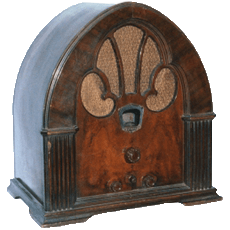
I believe that the Model E speaker was introduced in around 1927 or so and is more commonly associated with AC sets like the Model 36 or very commonly with the Model 40 and was built into the "Stove" models. It was also likely used with sets like the model 35 which had provisions for biasing the output stage so tubes like that 112 or 71A could be used. It is kind of an anachronism, as the Model E was introduced in about 1927 and the A-K breadboard set production ended in 1924 or 1925
However, here is a page from Atwater Kent.net stating that for a speaker, that any horn or magnetic type speaker can be used:
http://atwater-kent.net/breadboards/page2-3.jpg
Horn and "magnetic" speakers had similar impedances, around 1KOhm or so. However, I assume that magnetic speakers required more power. for battery sets, speakers or headphones were connected directly between the plate of the output tube and B+. For AC sets or sets using "Power" tubes like the 112 or 71A, LC coupling or, in the case of the Radiola 17, transformer coupling was used.
I was not able to find any documentation on the model E but here is an instruction manual for the Radiola 100-A speaker, also Ca 1927:
http://radiolaville.com/graphics/docs/ra...iption.pdf
Hope this helps.
"Do Justly, love Mercy and walk humbly with your God"- Micah 6:8
"Let us begin to do good"- St. Francis
Best Regards,
MrFixr55